Special Offer for the 4th of July

The Fourth of July is a day for Americans to celebrate their independence. With this independence comes freedom. It is certainly appropriate for Christians to be thankful for the blessings of freedom as we are able to worship God, read His word, and teach the truth to others without fear of persecution. We should pray for our leaders that these freedoms might continue (cf. 1 Timothy 2:1-2).
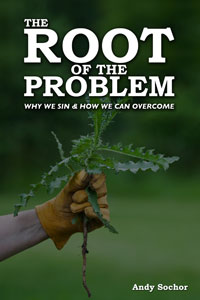
The Root of the Problem (cover)However, whether we have the blessing of living in a free nation or not, we have another freedom – a better freedom – in Christ. In Him we have become “freed from sin” (Romans 6:6-7). Being free from sin, we are to consider ourselves to be “dead to sin” (Romans 6:11).

So in honor of Independence Day and the freedoms we associate with it, Gospel Armory is offering a special deal on our book, The Root of the Problem: Why We Sin & How We Can Overcome. This book is designed to help Christians learn how to take advantage of the freedom from sin that is offered by Christ. The book normally sells for $8.99. But from now through Sunday July 7th, you can get The Root of the Problem in paperback for just $5!

This book can be used for both personal and group Bible study. So pick up one or two or a couple dozen… no matter what quantity you order, the price is just $5 each!

But wait, there’s more…

Besides making The Root of the Problem available for the low price of $5, we are also offering free shipping* on every order during this holiday weekend.

Once again, here’s the deal:

  1. The Root of the Problem – on sale for just $5!
  2. Free shipping* on everything!

Hurry and take advantage of this offer that’s good through this Sunday!

*Free shipping applies to shipments made within the continental U.S.

Excerpts from “Civil Government”

Civil Government - coverOver the last twelve weeks, we’ve been posting excerpts from our book, Civil Government: What the Bible Says About Its Origin, History, Nature, and Role. This page contains links to all the excerpts so you can find them all in one place.

  1. God-Given Rights
  2. Government’s History of Taking Man’s Rights
  3. Origins of Civil Government: A Rejection of God’s Rule Over Man
  4. The Foundation for a Godly Society
  5. What God Ordained with Respect to Civil Government
  6. A Minister of God, or of Satan?
  7. The Perils of a Strong, Centralized Government
  8. Limitations of Civil Government
  9. Our Responsibility to Civil Authorities
  10. The Bible and Taxation
  11. Why Christians Should Vote
  12. Keeping Things in Perspective

Click on any of the links above to read the excerpts. If you want more information about the book, or wish to purchase your copy, click here.

Civil Government: Chapter 12 – Keeping Things In Perspective (Excerpt)

Civil Government - coverWhile Christians might take advantage of good conditions that exist under a particular government, we must understand that no government will last forever. The wise man wrote, “Know well the condition of your flocks, and pay attention to your herds; for riches are not forever, nor does a crown endure to all generations” (Proverbs 27:23-24).

No matter how stable or powerful a government may be, it will eventually fall. People in our society have come to rely upon the government for so many things, even basic necessities. It is hard for many to imagine how we could possibly survive without our government in its current form. Yet the wise man tells us how we can survive: work hard, be good stewards, and trust in God and in His providence (Proverbs 27:23-27). Governments rise and fall, as they have done since their beginning and will continue to do until the end of time. God’s provisions will remain.

It is important to remember that no human government is exempt from this rule. When Daniel interpreted Nebuchadnezzar’s dream about the statue made up of gold, silver, bronze, iron, and clay, he prophesied of four world empires: the Babylonians, the Medes and the Persians, the Greeks, and the Romans (Daniel 2:31-43). Each one of these mighty nations fell. Even our current government, despite its great success over the last two hundred twenty-five years, will not be around forever.

You can read more about the fundamental truths which we must remember in any study of this topic in Civil Government: What the Bible Says About Its Origin, History, Nature, and Role. Follow the link to learn more about the book and purchase your copy today!

Civil Government: Chapter 11 – Why Christians Should Vote (Excerpt)

Civil Government - coverUnderstanding the difference between these two models of government [the divine model and Satan’s model] makes the Bible student the best voter. His vote is cast, not on the basis of a candidate’s appearance or charisma, but upon the basis of bedrock biblical principles. He knows that “righteousness exalts a nation” and that “sin is a disgrace to any people” (Proverbs 14:34). He knows that the “throne is established on righteousness” (Proverbs 16:12; 25:5).

Some wrongly conclude that referencing such Old Testament Scriptures constitutes a call for a theocracy. While it is true that Solomon lived and wrote under a theocratic form of government [God was the true King of Israel], “righteousness” does not “exalt a nation” only in a theocracy. “Righteousness” involves the right treatment of others and can be practiced in any type of government and in any age or country. While discussing civil government (Romans 13:1-10), Paul said, “The commandments, ‘You shall not commit adultery, You shall not murder, You shall not steal, You shall not covet,’ and any other commandment, are summed up on this word: ‘You shall love your neighbor as yourself.’ Love does no wrong to a neighbor; therefore love is the fulfilling of the law” (Romans 13:9-10, ESV). Paul here identified the fundamental purpose and operating principle of a God-ordained government: God’s model for civil government is one that protects people from being wronged by others. The reality is that “not all have faith,” as Paul wrote to the Thessalonians. There are “wicked and evil men” who wish to exploit, harm, and wrong others (2 Thessalonians 3:2, ESV). The divine model of government provides a mechanism for dealing with evil people. Personifying civil authority, Paul wrote, “For he is God’s servant for your good. But if you do wrong, be afraid, for he does not bear the sword in vain. For he is the servant of God, an avenger who carries out God’s wrath on the wrongdoer” (Romans 13:4, ESV). The job of government is to provide a peaceful atmosphere in which people may “heartily” do whatever they put their hands to doing (Colossians 3:23; 1 Timothy 2:2).

Those who properly understand these passages and principles understand the need to cast votes for candidates who appreciate this limited role that God has prescribed for civil government. Incidentally, there is a reason why the United States Constitution provides for a limited government with enumerated powers: it was composed by Bible students who understood the biblical principles expressed in this chapter.

You can read more about why Christians should vote in Civil Government: What the Bible Says About Its Origin, History, Nature, and Role. Follow the link to learn more about the book and purchase your copy today!

Civil Government: Chapter 10 – The Bible and Taxation (Excerpt)

Civil Government - coverThe Power To Tax Is The Power To Enslave

1 Kings 5:13 tells us that Solomon “drafted forced labor out of all Israel, and the draft numbered 30,000 men” (ESV). He also appointed 70,000 burden-bearers and 80,000 stone-cutters. 3300 officers were required to oversee these laborers. Any government with the power to force its citizens to give up their wealth and property also has the power to force its citizens into slavery. Of course, Samuel warned the people that these conditions would exist under monarchical government. He told the people, “You shall be his slaves” (1 Samuel 8:17, ESV). That is precisely what happened.

There is a great lesson in the fact that Solomon was not an evil king. He “loved the Lord, walking in the statutes of his father David” and was blessed by God with great wisdom and understanding (1 Kings 3:3; 4:29). Even so, his reign placed tremendous hardships upon his people. We learn from Solomon’s example that the kingdoms of even good kings place a terrible burden upon the citizens who are expected to maintain them. Solomon took from the strength and substance of the people whatever was required to fuel government expansion. As noted above, human governments become a vast labyrinth of administrations, agencies, and offices that are expensive to maintain. Interestingly, it was Solomon himself who described the inefficient and oppressive monstrosity that government often becomes:

“If you see in a province the oppression of the poor and the violation of justice and righteousness, do not be amazed at the matter, for the high official is watched by a higher, and there are yet higher ones over them” (Ecclesiastes 5:8, ESV).

Such is the nature of human government — layer upon wasteful layer of inefficient redundancy. Under the Jewish theocracy, with God as their only “King,” the primary function of the people was to serve God; and His requirements are never  “grievous” (1 John 5:3, KJV). Prior to the kings, no vast bureaucracies existed among the Jews to siphon off the fruits of their labor and break their entrepreneurial spirits. Heavy taxation and despair happened because of the impositions of human government. The same thing happens today.

You can read more about what the Bible says about taxation in Civil Government: What the Bible Says About Its Origin, History, Nature, and Role. Follow the link to learn more about the book and purchase your copy today!