Pray for Our Leaders (Plain Bible Teaching)

Plain Bible Teaching: The First Ten Years

The following is an excerpt from the book, Plain Bible Teaching: The First Ten Years.

The United States will eventually fall, whether this is in two years or two hundred years. But as Christians, we are part of a kingdom “which will never be destroyed” (Daniel 2:44). While being a citizen of the United States certainly has its advantages, we must remember that first and foremost, “our citizenship is in heaven” (Philippians 3:20).

We also need to pray for “all who are in authority, so that we may lead a tranquil and quiet life in all godliness and dignity” (1 Timothy 2:2). Why is “a tranquil and quiet life” important? Paul explained: “This is good and acceptable in the sight of God our Savior, who desires all men to be saved and to come to the knowledge of the truth” (1 Timothy 2:3-4). Liberty and security are the best conditions for the gospel to be spread. We must pray for our leaders that we might be able to enjoy our natural, God-given rights unhindered so that we may be able to influence as many people as possible.

You can read more in Plain Bible Teaching: The First Ten Years. Follow the link to learn more about the book and purchase your copy today!

It Is Not Good to Fine the Righteous (Notes on Proverbs)

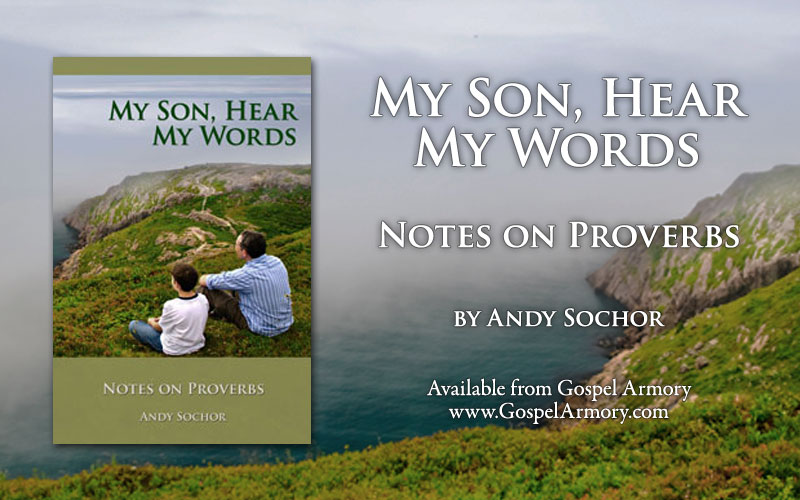
My Son, Hear My Words: Notes on Proverbs

The following is an excerpt from the book, My Son, Hear My Words: Notes on Proverbs.

It is also not good to fine the righteous, nor to strike the noble for their uprightness” (17:26). We have already noticed the responsibility of rulers to punish evildoers (20:8, 26). However, they must take care not to punish the righteous along with the wicked. Peter would later explain the primary responsibility of civil authorities: “For the punishment of evildoers and the praise of those who do right” (1 Peter 2:14). A sloppy execution of punishment that affects the righteous is not good. Those who are righteous and upright should not be fined, struck down, or otherwise harmed by those in power.

You can read more comments on the book of Proverbs in My Son, Hear My Words: Notes on Proverbs. Follow the link to learn more about the book and purchase your copy today!

Daily Notes & Observations: “Violating the Law but Committing No Crime” (Excerpt)

September 15

Violating the Law but Committing No Crime

Daily Notes & ObservationsAfter being delivered from the lions’ den — which was his punishment for praying to the Lord — Daniel declared his innocence before the king.

My God sent His angel and shut the lions’ mouths and they have not harmed me, inasmuch as I was found innocent before Him; and also toward you, O king, I have committed no crime” (Daniel 6:22).

Daniel said he was innocent toward the king and had “committed no crime.” But was this accurate? After all, Daniel violated a law that had been signed by the king.

‘All the commissioners of the kingdom, the prefects and the satraps, the high officials and the governors have consulted together that the king should establish a statute and enforce an injunction that anyone who makes a petition to any god or man besides you, O king, for thirty days, shall be cast into the lions’ den. Now, O king, establish the injunction and sign the document so that it may not be changed, according to the law of the Medes and Persians, which may not be revoked.’ Therefore King Darius signed the document, that is, the injunction” (Daniel 6:7-9).

Daniel clearly violated the law, yet he did nothing against God or the king. While Daniel’s statement — “I have committed no crime” — may seem inaccurate on the surface, his statement actually reflects a Scriptural principle: God’s people are to obey Him first and should not feel any guilt for refusing to submit to an ungodly law as the one Daniel refused to obey.

Remember what Peter declared to the Council: “We must obey God rather than men” (Acts 5:29). Later, in writing about our responsibility toward civil authorities, Peter said, “Act as free men, and do not use your freedom as a covering for evil, but use it as bondslaves of God” (1 Peter 2:16).

We are to act as free men because that is what we are. We have no obligation to comply with anti-God legislation.


Daily Notes & Observations contains 365 articles like the one above – one article per day that will take you through the Bible in a year. Be prepared to start your study on January 1st – order your copy today!

Daily Notes & Observations: “The Slaughter of the Priests” (Excerpt)

April 14

The Slaughter of the Priests

Daily Notes & ObservationsThe reign of Saul provides a series of examples showing why it is dangerous to allow one man to hold such great power over a people. He went from being afraid to accept the throne to being willing to do anything to hold onto his power. The incident with the priests in Nob illustrates the degree of wickedness to which he had attained.

Saul said to [Ahimelech the priest], ‘Why have you and the son of Jesse conspired against me, in that you have given him bread and a sword and have inquired of God for him, so that he would rise up against me by lying in ambush as it is this day?’

Then Ahimelech answered the king and said, ‘…Did I just begin to inquire of God for him today? Far be it from me! Do not let the king impute anything to his servant or to any of the household of my father, for your servant knows nothing at all of this whole affair.’

But the king said, ‘You shall surely die, Ahimelech, you and all your father’s household!’ And the king said to the guards who were attending him, ‘Turn around and put the priests of the Lord to death…’ But the servants of the king were not willing to put forth their hands to attack the priests of the Lord. Then the king said to Doeg, ‘You turn around and attack the priests.’ And Doeg the Edomite turned around at attacked the priests, and he killed that day eighty-five men who wore the linen ephod. And he struck Nob the city of the priests with the edge of the sword, both men and women, children and infants…” (1 Samuel 22:13-19).

Saul had no proof that Ahimelech did anything wrong, only a suspicion. But for one in a position of power who views himself as above the law and believes his highest priority is retaining power, mere suspicion was enough. He charged the innocent priest, tried him in his own mind, then executed his own perverted form of justice against him. Even when his servants were unwilling to carry out this order, they did not oppose the king. Saul then found someone who would punish the innocent priest. This punishment spilled over to the rest of the city and all the inhabitants were killed.

It’s amazing how one who was “hiding himself by the baggage” when he was set to be publicly announced as king (1 Samuel 10:22) could be so transformed after receiving such power.


Daily Notes & Observations contains 365 articles like the one above – one article per day that will take you through the Bible in a year. Be prepared to start your study on January 1st – order your copy today!

Excerpts from “Civil Government”

Civil Government - coverOver the last twelve weeks, we’ve been posting excerpts from our book, Civil Government: What the Bible Says About Its Origin, History, Nature, and Role. This page contains links to all the excerpts so you can find them all in one place.

  1. God-Given Rights
  2. Government’s History of Taking Man’s Rights
  3. Origins of Civil Government: A Rejection of God’s Rule Over Man
  4. The Foundation for a Godly Society
  5. What God Ordained with Respect to Civil Government
  6. A Minister of God, or of Satan?
  7. The Perils of a Strong, Centralized Government
  8. Limitations of Civil Government
  9. Our Responsibility to Civil Authorities
  10. The Bible and Taxation
  11. Why Christians Should Vote
  12. Keeping Things in Perspective

Click on any of the links above to read the excerpts. If you want more information about the book, or wish to purchase your copy, click here.